
In today’s manufacturing environment, where competition is fierce and profit margins are narrow, smart product design becomes a decisive factor in the success of any factory relying on plastic injection molding. The greatest challenge lies in achieving high production efficiency while minimizing defects and scrap, all while maintaining fast injection cycles. Any design error or neglect of engineering analysis principles can lead to production disasters: high rejection rates, longer cycle times, or costly mold modifications. Therefore, investing in well-thought-out design is not a luxury it is a strategic necessity.
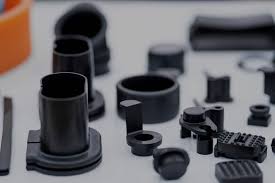
In today’s manufacturing environment, where competition is fierce and profit margins are narrow, smart product design becomes a decisive factor in the success of any factory relying on plastic injection molding. The greatest challenge lies in achieving high production efficiency while minimizing defects and scrap, all while maintaining fast injection cycles. Any design error or neglect of engineering analysis principles can lead to production disasters: high rejection rates, longer cycle times, or costly mold modifications. Therefore, investing in well-thought-out design is not a luxury—it is a strategic necessity.
Cycle Time Analysis: The Role of Design in Accelerating Cooling
Cycle time is the most influential factor in injection molding productivity. The cooling phase alone can account for more than 60% of the total cycle time.
· Smart Cooling Channel Design: Using conformal cooling channels that match the cavity shape can reduce cooling time by up to 30% compared to conventional channels.
· Direct Cost Savings: Reducing cycle time by just a few seconds in a 20-second injection cycle can translate into thousands of additional parts per month, achieving over 25% savings in operating costs.
· Practical Example: In an automotive parts factory, optimizing cooling design reduced cycle time from 18 seconds to 13 seconds, increasing daily productivity by 38%.
Scrap Reduction: How to Prevent Defects Leading to Product Rejection
Scrap caused by defects such as cracks, shrinkage, or burn marks represents a financial drain for factories.
· Smart Gate Design: Proper selection of gate location and size reduces the likelihood of weld lines by up to 40%.
· Flow Simulation Analysis: Using simulation software before mold manufacturing helps predict defect-prone areas and avoid them, reducing scrap by up to 25%.
· Cost Savings: Every 1% reduction in scrap in a factory producing one million parts annually equates to thousands of dollars saved in raw materials and energy.
Balancing Engineering Aesthetics and Production Efficiency
Engineers often face the challenge of balancing product aesthetics with production efficiency.
· Complex Surfaces vs. Injection Ease: Designs with fine curves may increase cycle time due to cooling difficulties. The solution lies in modifying the design to achieve the desired shape while maintaining uniform wall thickness.
· Aesthetics Without Sacrificing Productivity: With tools such as Design for Manufacturability (DFM) analysis, it is possible to achieve the desired appearance while reducing cycle time by up to 20%, ensuring cost savings without compromising visual quality.
· Example: In the production of a household tool, redesigning the handle with simpler geometry reduced cycle time by 4 seconds while preserving the required aesthetic appeal.
Conclusion
Adhering to smart design principles in plastic injection molding is not just a technical improvement—it is a comprehensive strategy to avoid production disasters. Through cycle time analysis, scrap reduction, and balancing aesthetics with efficiency, factories can boost productivity by more than 30% and achieve tangible cost savings. Thoughtful design is the first line of defense against scrap and the key to sustaining profitability.