
Transforming raw polymer pellets into a finished, dimensionally stable product is one of the most demanding challenges in modern manufacturing. Plastic injection molding is not simply a mechanical operation; it is a tightly controlled sequence of thermal, hydraulic, and tooling interactions. For manufacturers, mastering this process means reducing scrap, shortening cycle times, and ensuring consistent quality. Studies in Design for Manufacturability (DFM) show that early optimization can reduce tooling rework costs by up to 40%.
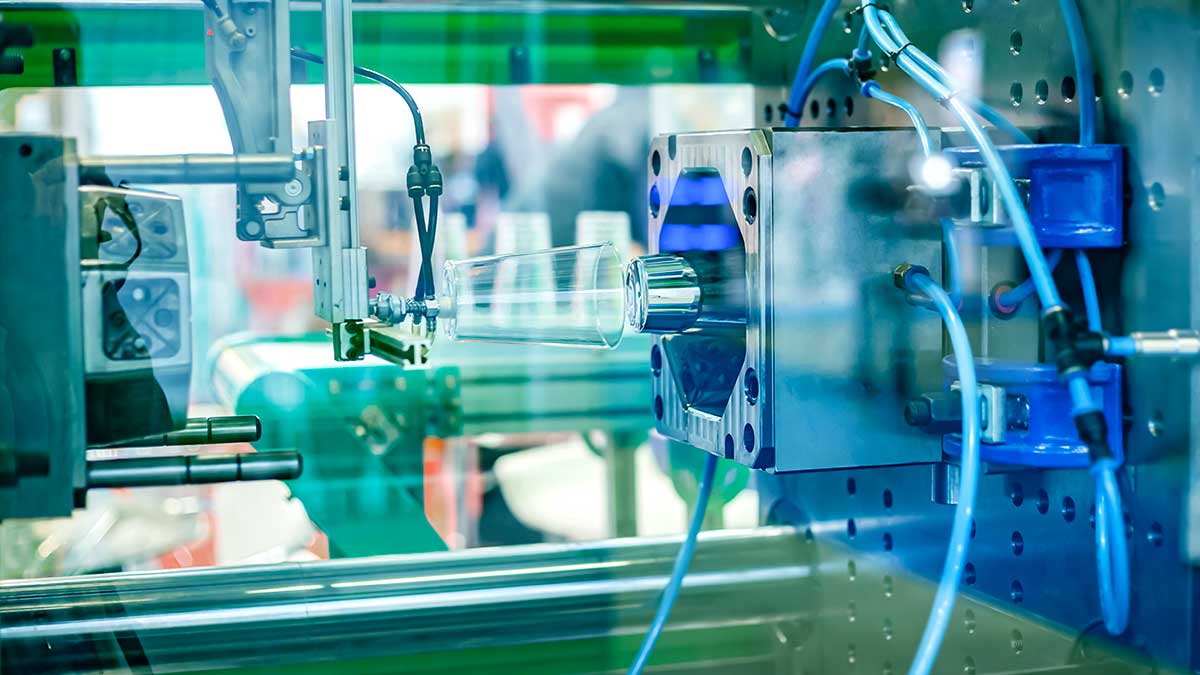
Transforming raw polymer pellets into a finished, dimensionally stable product is one of the most demanding challenges in modern manufacturing. Plastic injection molding is not simply a mechanical operation; it is a tightly controlled sequence of thermal, hydraulic, and tooling interactions. For manufacturers, mastering this process means reducing scrap, shortening cycle times, and ensuring consistent quality. Studies in Design for Manufacturability (DFM) show that early optimization can reduce tooling rework costs by up to 40%.
Injection Molding Machine Components: Injection Unit and Clamping Unit
A typical injection molding machine consists of two primary modules:
· Injection Unit
o Hopper: feeds resin pellets.
o Screw/Barrel: conveys, melts, and homogenizes the resin.
o Heaters: maintain melt temperature.
o Nozzle: delivers molten resin into the mold cavity.
· Clamping Unit
o Mold platens and clamping mechanism (toggle or hydraulic).
o Provides the closing force to resist cavity pressure during injection.
o Ensures dimensional accuracy by preventing mold separation and flash.
Correct sizing of clamp force is critical: insufficient force leads to flash, while oversizing increases energy consumption and operating costs.
The Injection Cycle: Step-by-Step
The injection cycle (دورة الحقن) follows a precise sequence:
1. Feeding: Resin pellets enter the barrel.
2. Melting: Shear and conduction transform pellets into a homogeneous melt.
3. Injection (Fill): Melt is pushed into the cavity at controlled velocity.
4. Packing/Holding: Pressure is maintained to compensate for shrinkage.
5. Cooling: The part solidifies; cooling often consumes 50–80% of cycle time.
6. Ejection: Mold opens and ejector pins release the part.
Each stage directly influences dimensional stability and surface finish. For example, insufficient packing pressure results in voids, while inadequate cooling leads to warpage.
Process Variables and Their Impact on Quality
Melt and Mold Temperature
· High melt temperature reduces viscosity and improves flow but risks degradation.
· Mold temperature affects surface gloss, weld line strength, and crystallinity.
Injection and Holding Pressure
· Determines cavity fill and shrinkage compensation.
· Low pressure → short shots and voids.
· Excessive pressure → residual stress and flash.
Cooling Time
· Dominates cycle length.
· Cutting cooling time without redesigning cooling channels can increase rejection rates by 15–20% in thick-walled parts.
These parameters are not independent; they form a process window that must be mapped through Design of Experiments (DOE) to achieve stable production.
Practical Engineering Controls
· DFM in Tooling: Uniform wall thickness and optimized gate design reduce mold complexity and rework costs by 20–40%.
· DOE Studies: Factorial experiments on melt temperature, injection speed, and hold pressure can reduce dimensional variability by up to 30%.
· Real-Time Monitoring: Pressure and temperature sensors in the mold cavity allow closed-loop control, improving repeatability and reducing scrap.
Conclusion
The journey from resin to product is a multidimensional engineering challenge. Success requires more than operating a plastic injection machine; it demands integration of tooling design, process optimization, and real-time monitoring. By applying DFM principles, defining robust process windows, and controlling manufacturing parameters with precision, manufacturers can achieve shorter cycles, lower costs, and superior product quality. Invest in process discipline early to ensure the resin consistently transforms into a product that meets specifications and market demands.